Financial Literacy Tests, Program Experience Tools, & Assessments 

High‑impact financial education doesn’t stop at teaching facts; it aims to create visible, lasting improvements in people’s financial well‑being. To truly understand whether a program is making a difference, it’s essential to look beyond knowledge checks and examine how learning shifts attitudes, daily habits, decision‑making systems, and real‑life financial outcomes. Well‑designed financial education assessments give educators and organizations across India a structured way to monitor participant growth and clearly demonstrate program effectiveness.

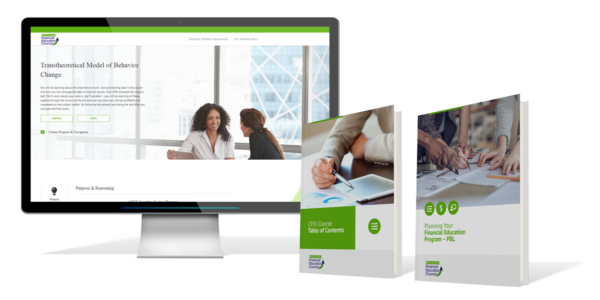
Just as important as measurement is the experience learners have along the way. Strong programs are built on thoughtful planning, skilled facilitation, and follow‑up that helps new habits become ingrained. The NFEC supports educators throughout India with a flexible collection of resources – including preparation guides, facilitation tools, outcome‑tracking systems, and reinforcement materials – all designed to help deliver consistent, engaging, and high‑quality financial education.

Financial Literacy Test & Assessments

The true measure of a financial education program is the real-world impact it creates long after the learning experience ends. Effective programs do more than increase knowledge – they help people build confidence, improve financial behaviors, and make informed decisions that support long-term financial well-being. To understand whether your program is creating meaningful change, it’s important to evaluate progress across multiple dimensions. These measurements provide insight not only into what participants learned, but also how they think, feel, and apply that knowledge in everyday life.

The NFEC’s comprehensive assessment bank and reporting toolkit are designed to help organizations demonstrate meaningful program outcomes – not just information retention. Fully customizable, competency-mapped, and audit-ready, these tools make it easier to measure and communicate the real impact of your instruction to stakeholders. The assessment system includes ten customizable evaluations and hundreds of assessment items that capture learner attitudes, behaviors, systems, and long-term outcomes. Together, these tools provide a complete picture of how financial education is influencing participants’ lives in measurable ways. These assessment banks include targeted measures across the following areas:

Behaviors

Observable actions that support their journey to becoming effective stewards of their finances.

Systems

The routines, tools, or structures they’ve developed to support their personal finance management.

Stage of Change

Their readiness and willingness to apply what they’ve learned.

Sentiment

Their feelings, confidence, and mindset toward applying what they learned in the lessons.

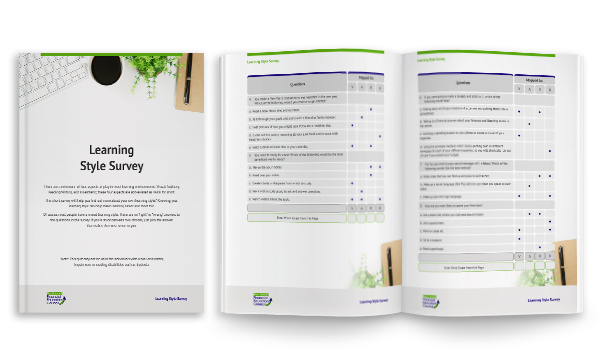
Learning Style Survey

Measure how learners prefer to receive, process, and engage with information.

Interest

Their level of engagement and motivation to learn the subject matter.

Content Knowledge

What learners understand about teaching personal finance topics. (Available with curriculum only.)

Support

The networks, resources, or people they access to help them succeed.

Actions

Specific steps learners take as a direct result of the training.

Outcomes

Real-world impact and measurable results stemming from their learning experience.

Case Study Report Template

A professional tool to document your program’s success and showcase outcomes to funders, employers, and community partners

Certification Tour, Graduate Features, & Bonus Presentation Resources

  • CFEI® Tour: See how the program works and explore the journey step by step.

  • Graduate Features: Hear real stories from instructors making an impact.

  • Bonus Resources: Get exclusive teaching tools to elevate your financial education programs.

This is more than a course – it’s your opportunity to join a global network of educators committed to empowering individuals and communities with practical, life-changing financial skills.

By accessing the NFEC’s material, you agree to comply with the full terms.

Join Over 5,000 Enrolled CFEI® Champions Providing Others Qualified Financial Education

Materials That Enhance the Learner Experience

Running a truly high‑impact financial education program takes more than solid content – it demands intentional planning, polished facilitation, and consistent reinforcement that transforms learning into real behavior change. To help you deliver a world‑class experience, we’ve built a complete suite of program resources that supports you from early planning through delivery and long‑term follow‑up.

Every tool is crafted to streamline your prep, elevate consistency across facilitators and locations, and ensure every session meets professional standards with clear, measurable outcomes. And because everything is fully customizable – from registration flows and facilitator checklists to outcome tracking systems and ongoing learning materials – you can tailor the entire experience to your brand, your learners, and your context.

This comprehensive package frees you to focus on what matters most: creating powerful learning experiences that build knowledge, shift behaviors, and help participants achieve lasting financial well‑being.

Pre-programming

Preparation checklists, pre-participant surveys, registration workflows, and email templates to build anticipation and set the tone.

Implementation

Professional banners, event handouts, measurement tools, and facilitation checklists to ensure smooth, impactful delivery.

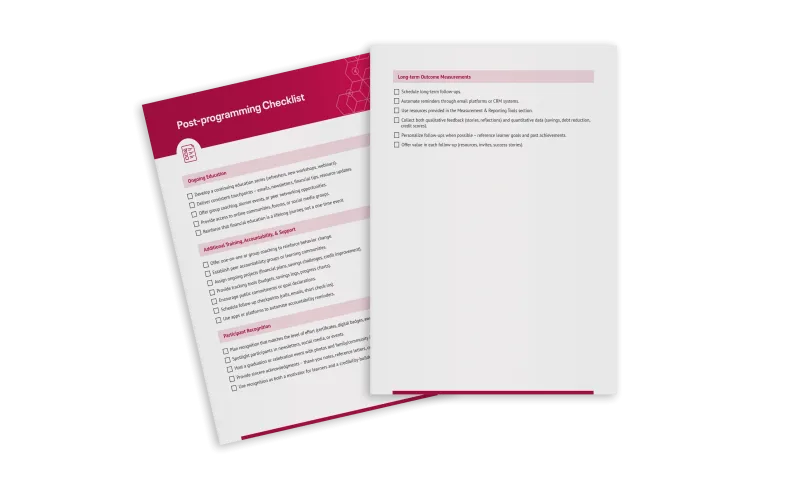
Post-programming

Recognition templates, outcome measurement systems, and ongoing education materials to reinforce learning and strengthen long-term outcomes.

Certification Tour, Graduate Features, & Bonus Presentation Resources

  • CFEI® Tour: See how the program works and explore the journey step by step.

  • Graduate Features: Hear real stories from instructors making an impact.

  • Bonus Resources: Get exclusive teaching tools to elevate your financial education programs.

This is more than a course – it’s your opportunity to join a global network of educators committed to empowering individuals and communities with practical, life-changing financial skills.

By accessing the NFEC’s material, you agree to comply with the full terms.

Join Over 5,000 Enrolled CFEI® Champions Providing Others Qualified Financial Education

NCFE Financial Literacy and Inclusion Survey (NCFE-FLIS) 2019

Lead organization: National Centre for Financial Education in coordination with the Reserve Bank of India and other Indian financial regulators

Year: 2019

Key results:

  • Overall financial literacy in India measured at 27%, up from 20% in the 2013 survey.
  • Urban respondents scored higher (33%) than rural respondents (24%).
  • Male financial literacy rate was 29%, compared with 21% for females.
  • Goa, Chandigarh, and Delhi ranked among the highest-performing regions.
  • Survey covered approximately 75,000 adults aged 18–80 across India.

NCFE Financial Literacy and Inclusion Survey (NCFE-FLIS) 2013-14

Lead organization: National Centre for Financial Education

Year: 2013-2014

Key results:

  • First nationwide baseline assessment of financial literacy and inclusion in India.
  • Survey covered approximately 75,000 respondents across 35 states and union territories.
  • Established benchmark indicators for financial knowledge, behavior, savings, and inclusion.
  • Used to support development of India’s national financial education strategy.

National Strategy for Financial Education (NSFE) 2020-2025 – Baseline Financial Literacy Findings

Lead organizations: Reserve Bank of India and National Centre for Financial Education

Year: 2020

Key results:

  • NSFE 2020–25 incorporated findings from the NCFE-FLIS 2019 national assessment.
  • Identified significant gaps in long-term financial planning, risk awareness, and financial capability.
  • Recommended the national “5C” approach: Content, Capacity, Community, Communication, and Collaboration.
  • Established measurable national financial education priorities for schools, adults, and vulnerable groups.

OECD/INFE International Survey of Adult Financial Literacy Competencies

Lead organization: Organisation for Economic Co-operation and Development (OECD/INFE) India participation/reference

Year: Various comparative editions including 2020

Key results:

  • OECD/INFE methodology measures financial knowledge, financial behavior, and financial attitudes.
  • India has used OECD/INFE-aligned indicators within NCFE national surveys.
  • Comparative findings highlighted lower scores in retirement planning and diversified investing relative to OECD averages.
  • Survey framework influenced India’s national measurement standards for financial capability.

Standard & Poor’s Global Financial Literacy Survey – India Results

Lead organizations: Standard & Poor’s, World Bank, and Gallup

Year: 2014

Key results:

  • Approximately 24% of Indian adults were considered financially literate.
  • Survey measured understanding of inflation, risk diversification, numeracy, and interest compounding.
  • India scored below the global average but above several neighboring developing economies.
  • Large disparities identified by gender, education level, and income.

PISA Financial Literacy Assessment – Indian Participation Discussions and Benchmarking

Lead organization: Organisation for Economic Co-operation and Development

Relevant years: OECD PISA Financial Literacy cycles (2012 onward)

Key results:

  • PISA financial literacy assessments evaluate 15-year-old students’ ability to apply financial knowledge in real-life situations.
  • India has used PISA frameworks and OECD benchmarks in education policy discussions and financial capability planning.
  • Assessment domains include budgeting, banking, spending decisions, and risk awareness.